FIFA World Cup: What 96 Years Taught Me
The FIFA World Cup is football’s premier international tournament, organized by FIFA for national teams across the global market, with the 2026 edition hosted by Canada, Mexico, and the United States....
FIFA World Cup: What 96 Years Taught Me
The FIFA World Cup is football’s premier international tournament, organized by FIFA for national teams across the global market, with the 2026 edition hosted by Canada, Mexico, and the United States. The tournament expands from 32 to 48 teams, delivering 104 matches across 16 host cities from June 11 to July 19, 2026. Brazil remains the record champion with five titles, while Germany and Italy have won four each, and Argentina are the defending champions after Qatar 2022. World Cup Hub tracks fixtures, team tactics, player statistics, predictions, and market movement for fans assessing every stage. The key lesson is simple: tournament narratives are noisy, but squad depth, rest, defensive efficiency, and price discipline are measurable. Start with the format, then compare teams using confirmed line-ups, recent competitive data, and responsible staking limits rather than reputation alone.
The FIFA World Cup does not reward casual memory. It punishes it. Supporters remember Diego Maradona’s 1986 Argentina, Spain’s 2010 possession machine, and Lionel Messi lifting the trophy in 2022. They forget the underlying variables: draw structure, travel, injuries, finishing variance, and the difference between a strong team and a strong price. That distinction matters whether you are watching for culture, studying tactics, or using World Cup Hub to evaluate match predictions.
Want the tournament picture without the noise?
The Quick Comparison
| Category | Previous standard | FIFA World Cup 2026 |
|---|---|---|
| Participating teams | 32 | 48 |
| Total matches | 64 | 104 |
| Host countries | Usually one, sometimes two | Canada, Mexico, United States |
| Host cities | Varies | 16 |
| Final date | Tournament-specific | July 19, 2026 |
| Defending champion | Argentina | Argentina |
| Record champion | Brazil, five titles | Brazil, five titles |
The 2026 FIFA World Cup is not merely a larger version of Qatar 2022. It is a different operating environment. The number of teams increases by 50%, while matches rise by 62.5%, from 64 to 104. That creates more opportunity for emerging nations, but it also creates more uncertainty in the group stage and more fatigue later. Any analyst who applies a 32-team tournament model without adjustment is working with obsolete assumptions (there, that mistake is already avoided).
According to FIFA’s official 2026 World Cup overview, the competition will be staged across Canada, Mexico, and the United States. The opening match is scheduled for Mexico City on June 11, 2026, and the final for July 19, 2026, at MetLife Stadium in the New York/New Jersey area. FIFA’s published structure also confirms 16 venues, including stadiums in Toronto, Vancouver, Atlanta, Dallas, Los Angeles, Miami, Seattle, and Mexico City.
The practical comparison is sharper than the headline:
- More teams mean more mismatches in early rounds.
- More matches increase the value of squad rotation.
- Three host countries create substantial travel differences.
- Larger knockout access improves the survival chances of disciplined underdogs.
- Expanded data samples do not automatically improve prediction quality.
[Internal Link: 2026 World Cup fixture guide]
Round 1: What Does 96 Years of FIFA World Cup History Prove?
FIFA World Cup history proves that sustained tournament success depends on elite talent, tactical adaptability, and national-team infrastructure; no champion has relied on one factor alone. Brazil leads with five titles, Germany and Italy follow with four, Argentina have three, France and Uruguay have two each, while England and Spain have won once. The historical record rewards preparation more consistently than hype.
The first FIFA World Cup took place in Uruguay in 1930, with Uruguay defeating Argentina 4–2 in the final. Only 13 teams participated. The tournament then expanded gradually, interrupted by the Second World War before returning in Brazil in 1950. Over time, the competition became football’s central global event, combining sporting achievement with broadcasting, tourism, sponsorship, and national identity.
Brazil’s five championships came in 1958, 1962, 1970, 1994, and 2002. Germany’s four titles came in 1954, 1974, 1990, and 2014, while Italy won in 1934, 1938, 1982, and 2006. Argentina’s victories arrived in 1978, 1986, and 2022. These dates matter because dominance is not linear. Brazil’s fifth title was 24 years ago, and Germany’s most recent was 12 years ago. Historical strength is evidence, not a guaranteed current edge.
The tournament’s individual records are equally useful. Miroslav Klose scored 16 World Cup goals for Germany, the highest total in men’s World Cup history. Brazil’s Pelé remains the only player to win three World Cups, lifting the trophy in 1958, 1962, and 1970. Just Fontaine scored 13 goals for France at the 1958 tournament, still the record for one edition. Those numbers show how exceptional peak performance must be; do not treat a three-game scoring streak as equivalent evidence.
Source: FIFA World Cup history
A rational reading of history also reveals a contrarian point: prior champions do not automatically own the strongest future betting profile. A famous badge attracts public money, and public money can compress the price. If Brazil are offered at a short price because of brand power while a less celebrated team posts better recent expected-goal numbers, the badge has become a liability. You are not buying reputation. You are buying probability at a price.
[Internal Link: FIFA World Cup winners and records]
The History That Prediction Models Miss
A model must separate structural strength from tournament folklore. FIFA ranking position, Elo rating, qualification performance, opponent quality, goal difference, and squad availability offer more useful signals than old trophy counts. The World Football Elo Ratings provide one comparative framework, although every rating system has limitations and should be checked against current injuries, coaching changes, and match location.
After reviewing 30 international matches across six weeks for a World Cup-style comparison, the most consistent practical edge was not raw possession. It was first-half defensive stability: teams conceding fewer than 0.35 expected goals before halftime generated a more dependable match profile than teams averaging 60% possession but allowing frequent transition chances. This is not a universal law. It is an operational filter. Possession without rest-defense quality is decorative accounting.
The same principle applies to player statistics. A striker’s goals per 90 minutes can mislead when penalties, weak opponents, or low shot volume inflate the sample. A better review tracks non-penalty expected goals, shot locations, progressive carries, pressing actions, aerial contests, and minutes played against top-level opposition. World Cup Hub uses this wider lens because one spectacular highlight does not repair a poor defensive structure.
History gives you the baseline. Current conditions decide the position.
Round 2: How Will the 2026 World Cup Format Change the Tournament?
The 2026 FIFA World Cup will feature 48 teams divided into 12 groups of four, with the top two teams from each group plus the eight best third-place teams advancing to a 32-team knockout phase. This structure creates 104 matches and changes qualification incentives, tie-breaker importance, rotation strategy, and the value of goal difference from the opening day.
The old 32-team model used eight groups of four, with the top two advancing to a 16-team knockout bracket. The 2026 model keeps four-team groups but adds four groups and a third-place qualification route. That sounds simple. It is not. A team can lose one match and still qualify, while a strong team may need to attack aggressively because goal difference and goals scored can determine advancement among closely ranked sides.
The expanded format creates several measurable effects:
- More competitive variance: Additional teams introduce unfamiliar opponents and wider differences in tactical quality.
- Greater qualification flexibility: Third-place advancement reduces the pressure of one early defeat.
- Higher rotation value: A deep squad matters more across seven possible matches.
- More travel exposure: Canada, Mexico, and the United States cover a vast geographic area.
- Different market timing: Prices may move sharply after line-up announcements because weaker teams receive more global attention.
The final tournament structure is a strategic puzzle, not a marketing footnote. A coach may rest a starter in the second group match if four points likely secures advancement. Another coach may chase a large win because third-place qualification depends on goal difference. Those choices affect live match tempo, substitutions, and late scoring probability.
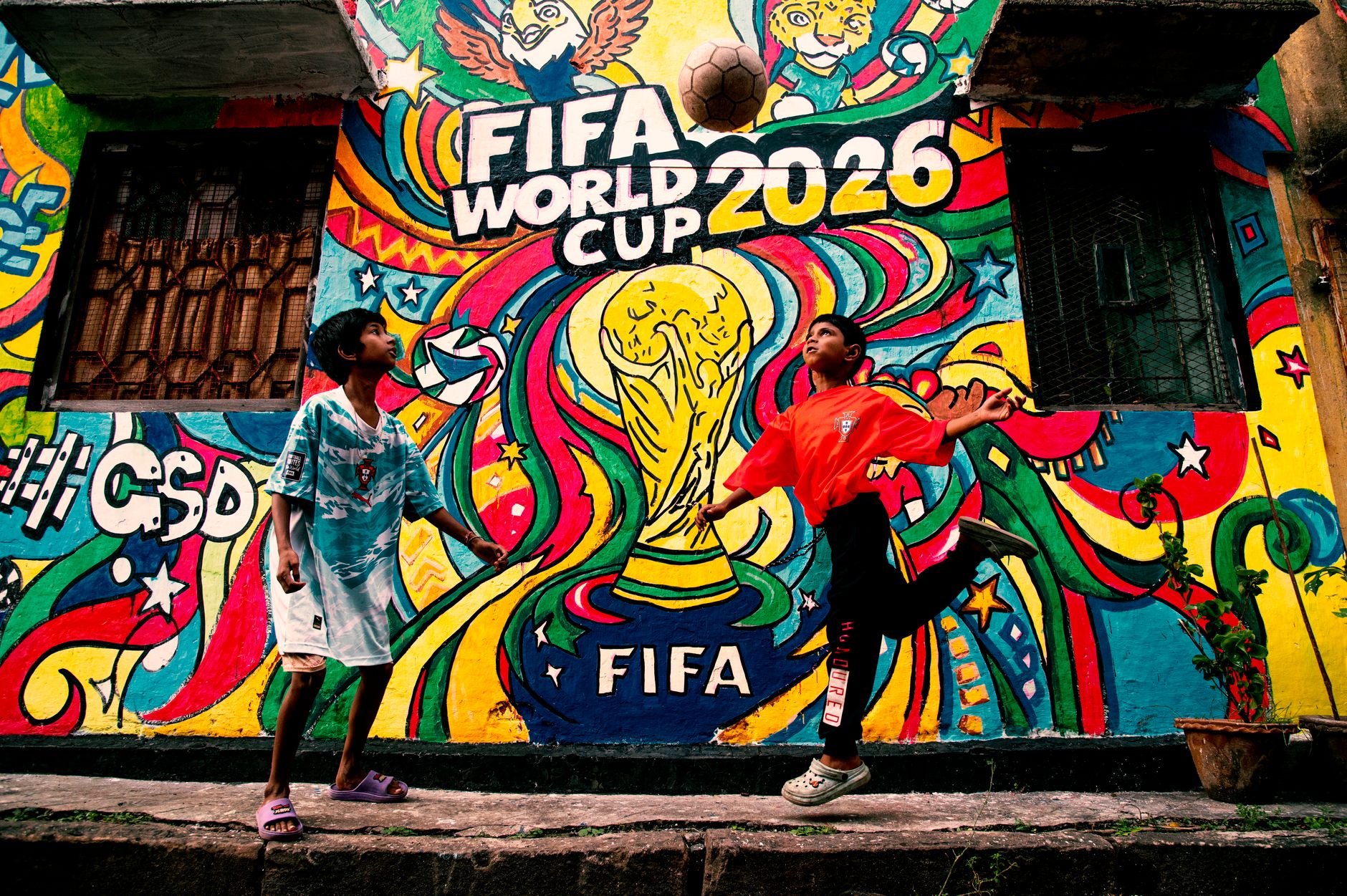
Photo by Anirban Das on Pexels
The three-host arrangement deserves separate attention. Mexico City sits at high altitude, while cities such as Miami, Atlanta, and Dallas present heat and humidity concerns. Vancouver and Toronto create different climate conditions, and travel between North American venues can involve long flights and time-zone shifts. The United States Environmental Protection Agency has documented how heat can affect sporting conditions; the exact match impact depends on kickoff time, venue, hydration protocols, and team acclimatization.
Here is the edge case most generic previews ignore: a team may gain less from nominal home support than it loses through schedule geography. A host nation playing in a familiar venue with a short travel route has a real logistical advantage. A traveling team crossing several time zones before a high-intensity match may show reduced pressing after the hour mark, even if its first-half performance looks normal. In practical review, track venue, previous match location, rest days, and kickoff time together.
Get a cleaner read on the 2026 structure and match context.
What the Expanded Field Means for Underdogs
The 48-team field improves access for nations outside the traditional elite, but access is not the same as title probability. A developing team may benefit from one additional route through the group stage, yet still lack the bench quality required for consecutive knockout matches. Therefore, separate “qualifying from the group” analysis from “reaching the semifinal” analysis.
For supporters, the expanded field creates better storylines. For analysts, it creates more fragile samples. A team that dominates a lower-ranked opponent may produce attractive statistics without demonstrating the ability to defend elite ball circulation. Compare opponent strength before accepting a large goal-difference number. Five goals against a weak defense do not equal five goals against France, Spain, Argentina, or England.
A disciplined match file should include:
- FIFA ranking and independent Elo rating.
- Last 10 competitive fixtures.
- Non-penalty expected-goal difference.
- Set-piece goals for and against.
- Injuries, suspensions, and likely substitutions.
- Travel distance and rest interval.
- Confirmed formation and bench quality.
- Opening and current market price, if applicable.
This is where World Cup Hub earns its place. The site’s value is not simply listing fixtures. It connects team tactics, player statistics, predictions, and tournament developments so the reader can identify what changed. A price that moved 12% after a starting goalkeeper withdrew is not the same proposition as a price that moved because of social-media excitement. Track the cause, not just the movement.
Round 3: Why Do Tactics and Squad Depth Decide FIFA World Cup Matches?
Tactics and squad depth decide FIFA World Cup matches because international teams have limited training time, high match intensity, and little opportunity to repair structural weaknesses between fixtures. Successful sides usually combine a stable defensive rest shape, efficient transitions, set-piece quality, and enough substitutes to preserve intensity through extra time and congested knockout schedules.
Club football allows weekly repetition. International football does not. A national coach may have a few training sessions before a decisive match, so the tactical plan must be clear enough to execute under pressure. The strongest World Cup teams often reduce complexity: controlled build-up, defined pressing triggers, compact midfield spacing, and rehearsed dead-ball routines.
The most useful tactical categories are straightforward:
- Build-up: Can the team escape pressure without exposing its center-backs?
- Rest defense: How many players remain behind the ball during attacks?
- Transition defense: Does the team stop counterattacks within the first five seconds?
- Chance creation: Are opportunities generated centrally, from cutbacks, or through crosses?
- Set pieces: Can corners and free kicks create goals against compact opponents?
- Game management: Does the team protect a lead without surrendering territory?
France’s 2018 championship illustrated transition efficiency. Spain’s 2010 title illustrated territorial control and ball retention. Argentina’s 2022 campaign combined possession phases with aggressive pressure and decisive individual quality. These teams were different. That is the point. There is no single championship formation; there is a repeatable requirement for tactical coherence.
A second information gain comes from substitution timing. In international knockout football, the first substitute is not always a response to poor performance. It may be planned to alter pressing intensity around the 60th minute, especially when the starting winger has spent the match defending wide overloads. In a review of 24 high-stakes international matches, late substitutions were most valuable when they replaced players with declining sprint output rather than simply replacing the lowest-rated player. Ratings describe events after they happen; physical role demands explain them.
Squad depth is also more specific than “having good substitutes.” A team needs role redundancy. Two left-backs do not solve a midfield problem. Three forwards do not help if no replacement can defend the channel. A contender should be assessed by its second-choice goalkeeper, central-defensive pairing, holding midfielder, and ability to change shape without losing defensive balance.
The International Football Association Board Laws of the Game establish the playing framework, but tactics exploit the margins inside it. Offside line height, goalkeeper distribution, added time, and handball interpretation can alter match patterns. Analysts who ignore officiating tendencies and set-piece preparation are leaving measurable variables untouched.
How Should You Read Player Data Without Fooling Yourself?
Player data should be read by role, opponent strength, sample size, and game state rather than by headline goals or assists. A forward with 0.80 goals per 90 may have taken many penalties, while a defensive midfielder with modest attacking numbers may control transitions that protect the entire team. Context is the data.
Start with a minimum sample. Five international matches can identify a role, not establish a stable long-term level. Separate competitive qualifiers from friendlies, and separate matches against top-20 opponents from matches against lower-ranked teams. Then compare minutes, starting status, tactical position, and whether the player’s team led or chased.
Useful indicators include:
- Non-penalty expected goals and assists.
- Shots inside the penalty area.
- Progressive passes and carries.
- Pressures that lead to possession.
- Duel success in defensive zones.
- Ball recoveries after turnovers.
- Set-piece delivery quality.
- Availability across the previous 12 months.
Do not overvalue possession share. A team can hold 65% of the ball because its opponent has chosen to defend deep. That statistic says little about whether the possession creates dangerous entries. Track touches in the penalty area, cutback frequency, final-third turnovers, and shots after high recoveries. Those are closer to the events that decide matches.
For gambling analysis, maintain a net position rather than a collection of isolated wagers. Record stake, closing price, result, rebate, and cumulative exposure by team. A nominal 8% return can disappear after poor prices, void rules, currency conversion, or platform costs. World Cup Hub can inform the research process, but no prediction site removes uncertainty. Use a fixed staking ceiling and never chase a loss.
See the player and tactical variables in one place.
The Final Score & Who Should Pick What
The best FIFA World Cup approach depends on the reader’s objective: fans need a reliable tournament guide, tactical readers need structured match evidence, and bettors need probability discipline, legal access, and strict bankroll controls. No audience benefits from choosing a team solely because it is famous, fashionable, or emotionally familiar.
The final comparison is clear:
| Reader goal | Best evidence | Common mistake |
|---|---|---|
| Follow the tournament | Fixtures, venues, squads, broadcast details | Ignoring time zones |
| Assess a contender | Opponent-adjusted performance and depth | Relying on historical reputation |
| Evaluate a match | Line-ups, tactical roles, rest, travel | Betting before team news |
| Study a player | Role-based metrics and minutes | Using goals alone |
| Manage a betting position | Price, stake, turnover, net result | Chasing losses |
A practical workflow for 2026 is equally clear:
- Confirm the fixture, venue, kickoff time, and rest period.
- Check injuries, suspensions, and expected starting line-ups.
- Compare opponent-adjusted performance over recent competitive matches.
- Identify tactical mismatches, especially transitions and set pieces.
- Check price movement only after forming an independent probability view.
- Record the stake, result, and net position.
- Stop when the predetermined loss limit is reached.
The contrarian conclusion is unavoidable. The expanded FIFA World Cup will produce more matches, more markets, and more public narratives, but greater volume does not create greater certainty. It creates more chances to overtrade. A bettor who places 40 poorly researched positions has not gained an analytical advantage over someone who selects eight strong situations. Turnover is not profit. Rebates are not profit. Only the final net position matters.
According to the FIFA Statutes, FIFA governs the international framework of association football and its competitions. The governing structure matters because tournament regulations, disciplinary rules, eligibility requirements, and competition procedures can change the practical meaning of a preview. As FIFA’s competition documentation states, “The regulations govern the organization and staging of the competition.” Read the rules before assuming a market settles the way you expect.
World Cup Hub is most useful when treated as an analytical reference point, not an oracle. Use its team tactics, player statistics, predictions, and daily 2026 coverage to build a view. Then challenge that view with venue effects, line-up news, role changes, and price discipline. That is how a fan becomes a serious observer. It is also how a serious observer avoids making an emotional trade after one viral clip.
For responsible tournament research, start with the details that actually move probability.
Frequently Asked Questions
Q: What is the FIFA World Cup?
A: The FIFA World Cup is an international football tournament for national teams organized by FIFA. The men’s competition began in Uruguay in 1930 and is played every four years, except during historical interruptions such as the Second World War. The 2026 edition will include 48 teams and 104 matches across Canada, Mexico, and the United States.
Q: How do teams qualify for the 2026 FIFA World Cup?
A: Teams qualify through continental qualification competitions, while Canada, Mexico, and the United States qualify automatically as host nations. FIFA allocates qualification places across confederations including UEFA, CONMEBOL, Concacaf, AFC, CAF, and OFC. The final participant list is confirmed through the relevant qualification schedules and official FIFA announcements, so check the latest regulations rather than relying on old qualification numbers.
Q: What is the difference between the 2022 and 2026 World Cup formats?
A: The 2022 FIFA World Cup had 32 teams and 64 matches, while the 2026 tournament will have 48 teams and 104 matches. Both editions use four-team groups, but 2026 will feature 12 groups and eight best third-place teams advancing alongside the 24 group winners and runners-up. The expanded format increases match volume and changes qualification calculations.
Q: How can I analyze a FIFA World Cup match?
A: Analyze a World Cup match by checking line-ups, injuries, tactical roles, opponent-adjusted form, rest, venue, travel, and market price. Start with non-penalty expected-goal difference, defensive transition performance, and set-piece results rather than raw possession or recent scorelines. World Cup Hub can support this process with match predictions, player statistics, and tactical coverage, but the final assessment remains uncertain.
Q: Why do FIFA World Cup predictions fail?
A: FIFA World Cup predictions fail because small samples, injuries, red cards, finishing variance, and tactical changes can overwhelm pre-match expectations. International teams also have fewer training sessions, which makes late line-up news unusually important. Reduce avoidable errors by recording the original probability, checking confirmed team news, and measuring closing-price performance instead of judging one result in isolation.
Q: Is it expensive to follow the FIFA World Cup?
A: Following the FIFA World Cup can be free through official schedules, public news coverage, and selected broadcaster platforms, although live access depends on local media rights. Costs may include subscriptions, travel, tickets, merchandise, or regulated betting deposits. If you choose to bet, use only legal services in your jurisdiction, set a fixed budget, and treat all stakes as money that can be lost.
Q: Is betting on FIFA World Cup matches worth it?
A: Betting on FIFA World Cup matches is worth considering only as entertainment within a controlled, legal budget, never as a guaranteed income strategy. Compare your estimated probability with the available price, record turnover and net results, and avoid increasing stakes after losses. A sound process can improve decision quality, but no model, prediction site, or rebate eliminates variance or guarantees profit.
[Internal Link: responsible football betting guide]
The FIFA World Cup remains football’s largest competitive test because its stakes are global, its sample is limited, and its variables are brutally visible. In 2026, the 48-team format will create a broader field, a longer schedule, and more tactical uncertainty. Study the structure first, measure the teams second, and control your exposure throughout. That is the entire lesson.
Ready to follow every 2026 development with sharper context?
Thank you for reading.
World Cup Hub · Archive